
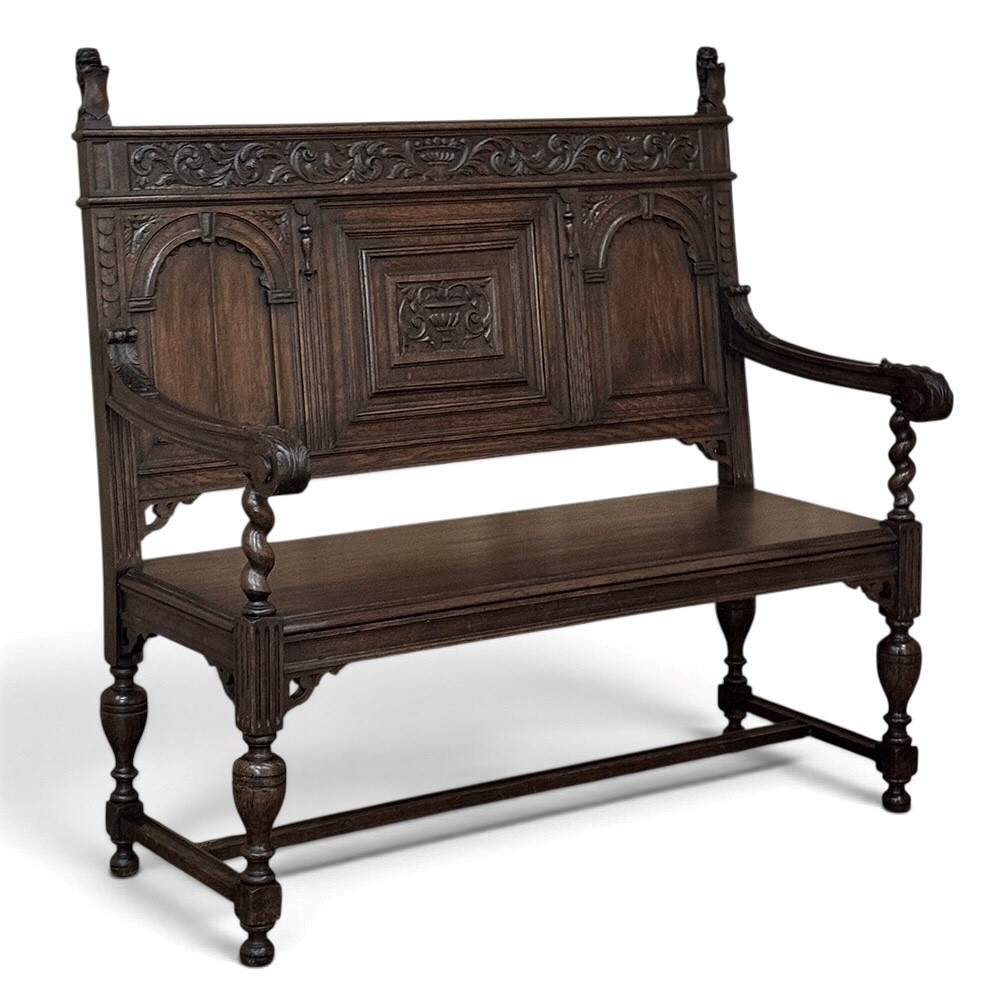
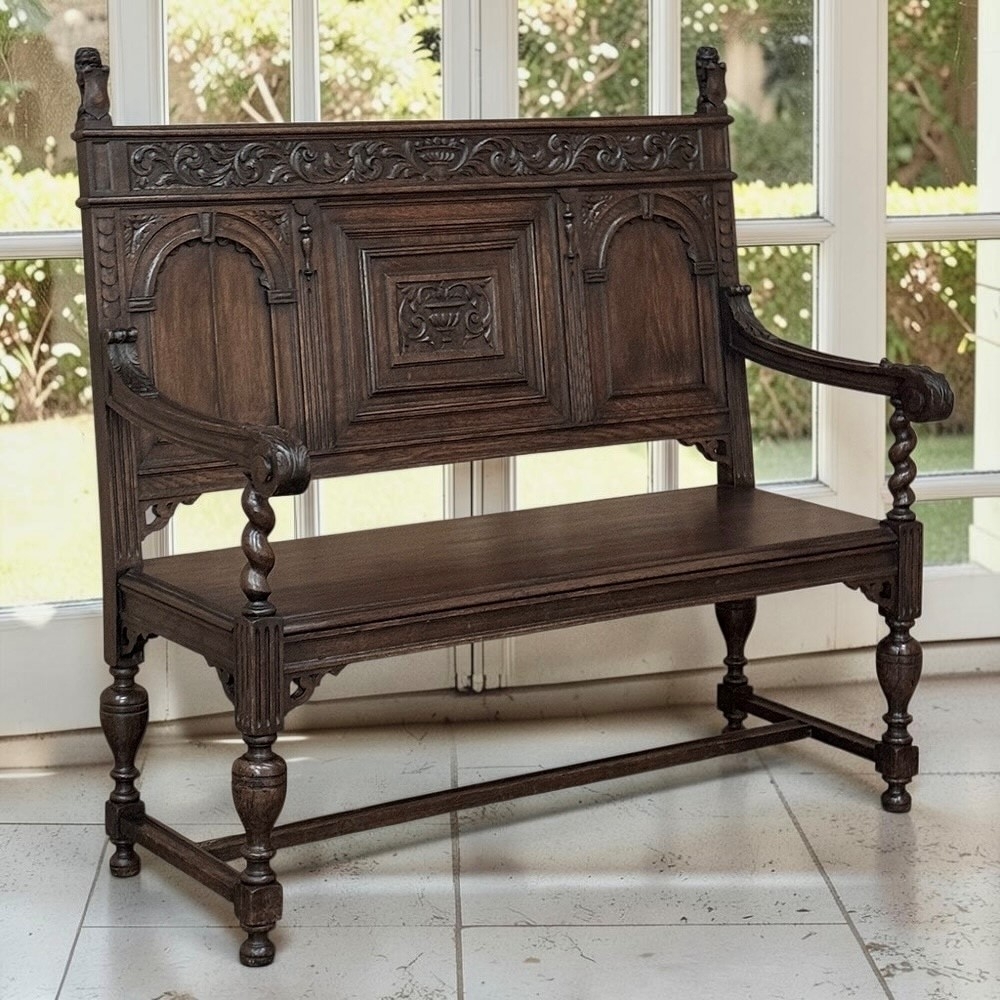
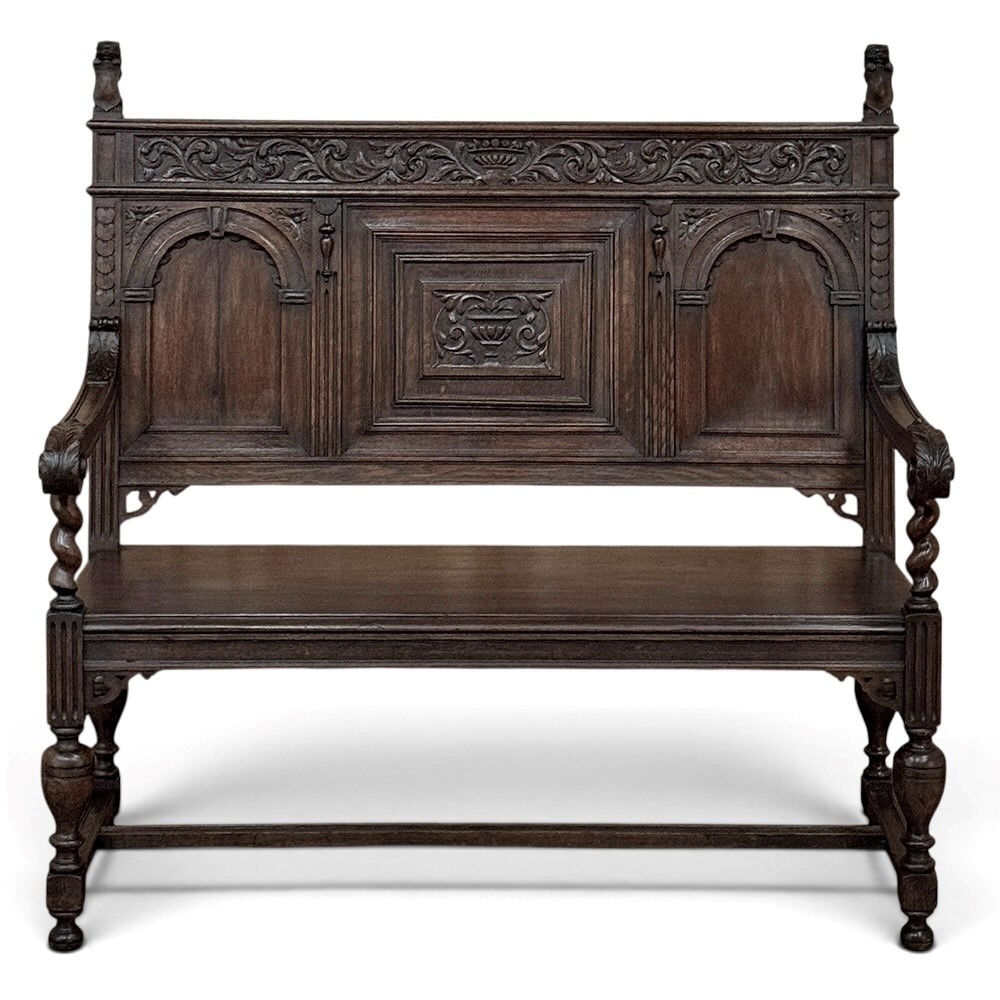
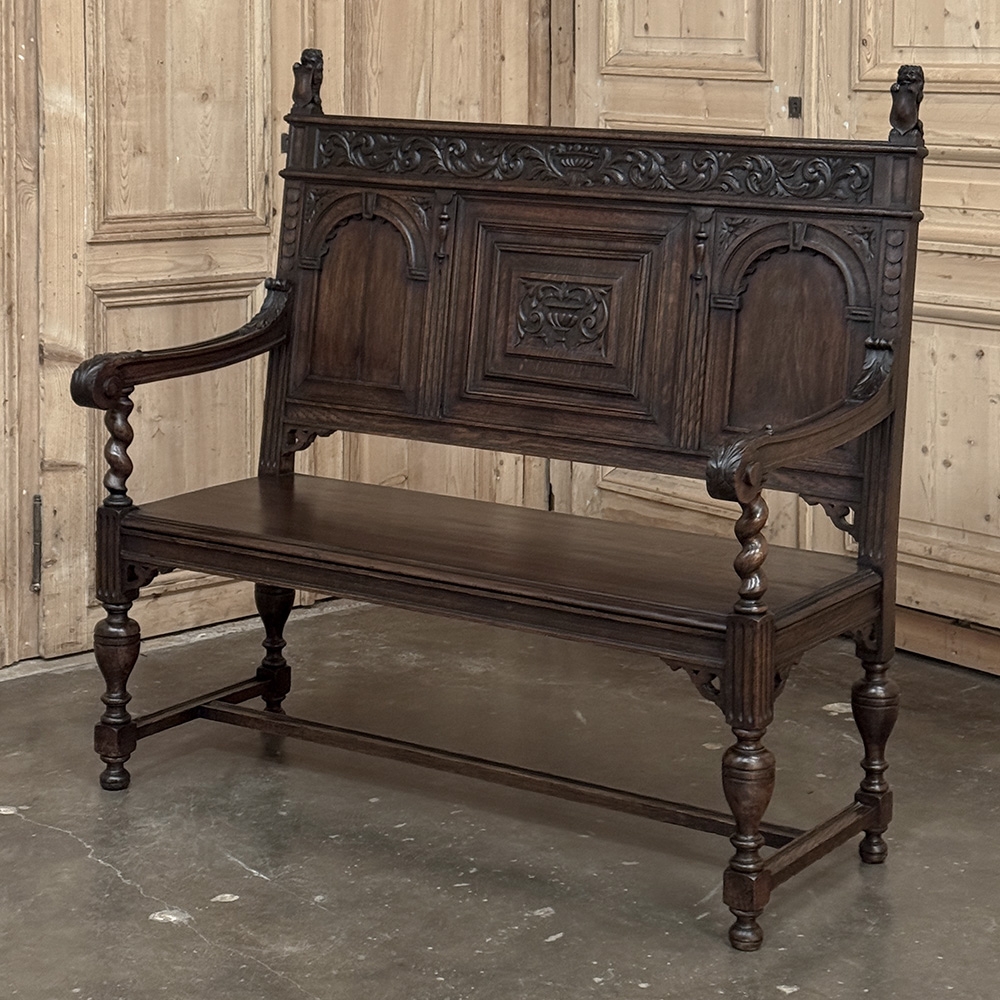

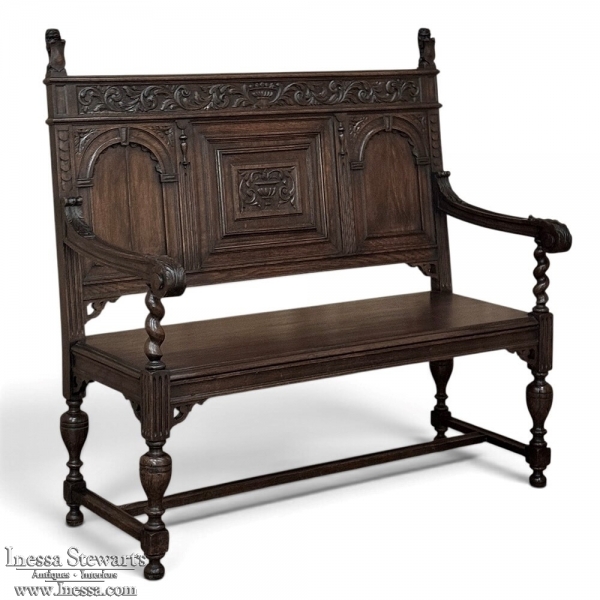
19th Century Dutch Carved Oak Renaissance Revival Bench
2602-576 (Click to Inquire About This Item)
48H x 48W x 23D; seat 18.5H
Location: Dallas
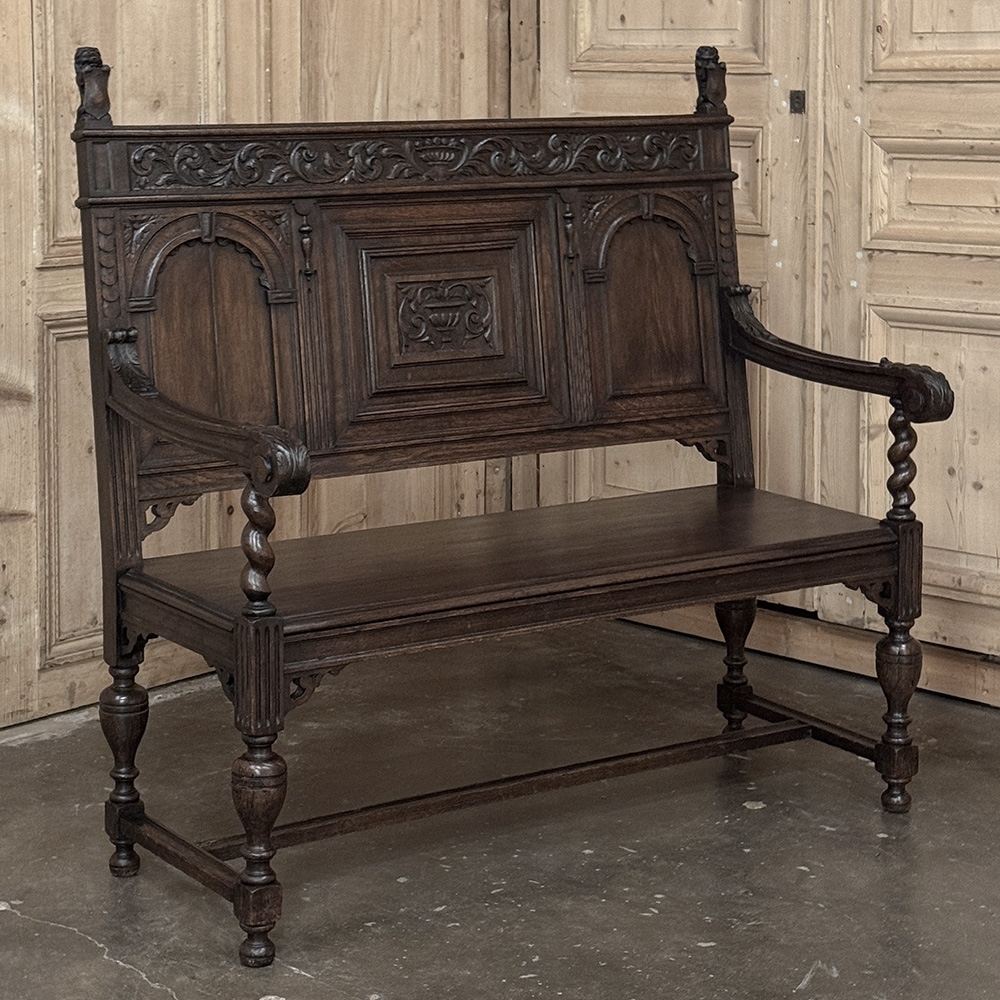
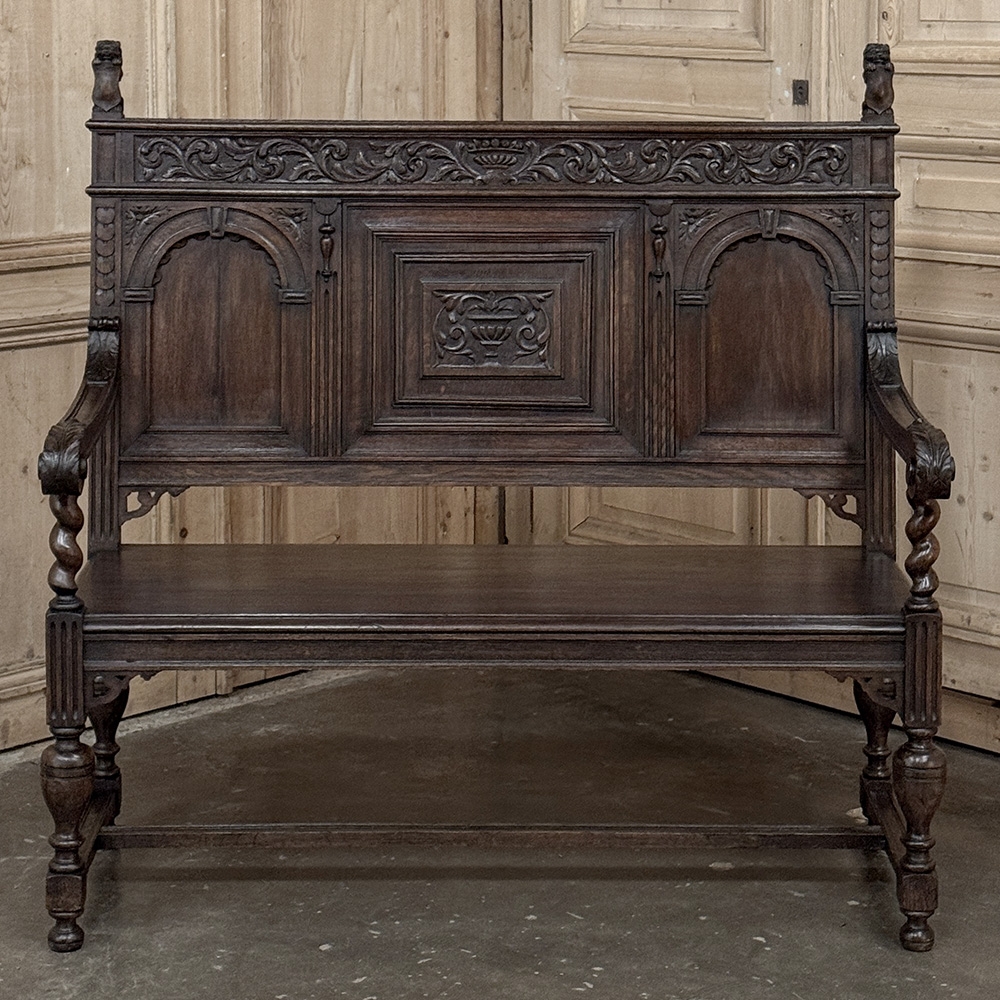
Created in the 19th century during the great European Renaissance Revival, this Dutch carved oak hall bench reflects a period when designers and craftsmen deliberately looked back to the architecture, furniture, heraldry, and decorative arts of the Renaissance for inspiration.
The Renaissance itself represented one of the great flowering periods of European art and culture, and centuries later its forms returned to fashion as prosperous households sought furnishings that conveyed history, permanence, education, and social standing. Rather than merely copying earlier furniture, Renaissance Revival craftsmen adapted those historic ideas for contemporary interiors, which accounts for the strong architectural character of this bench.
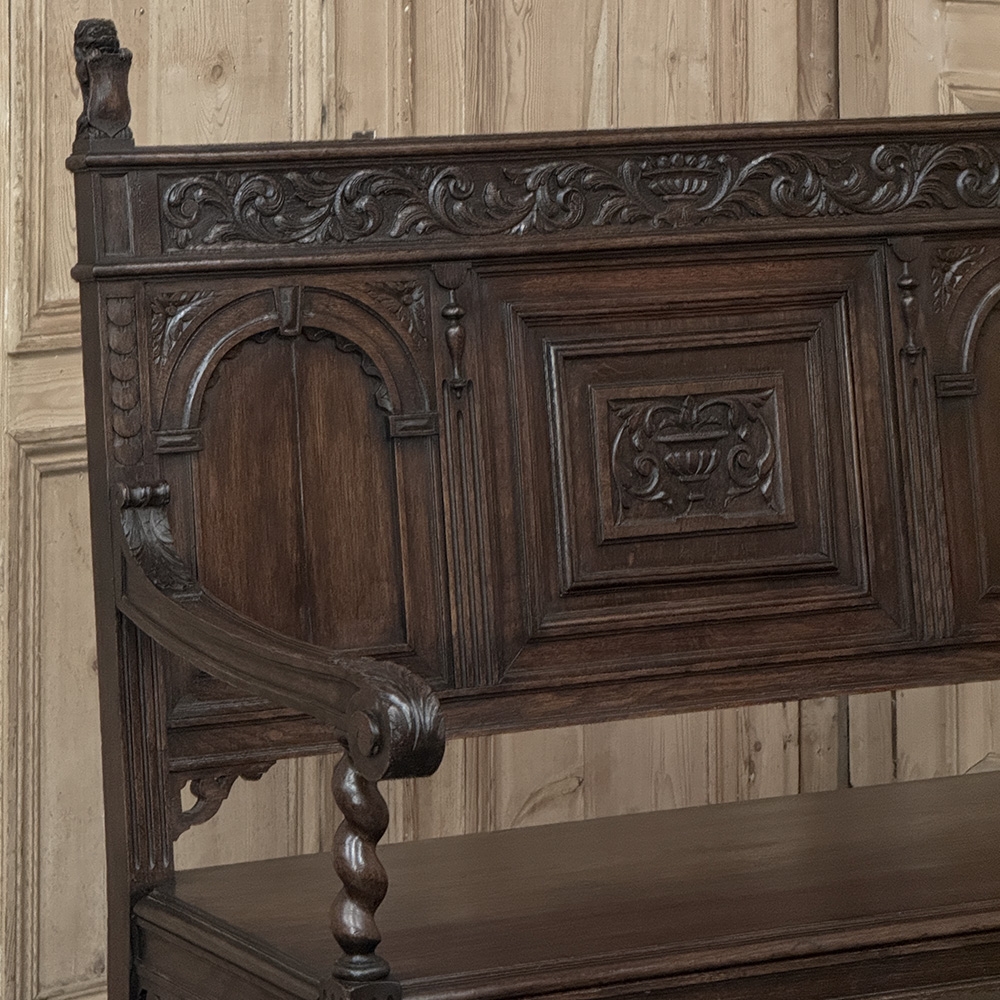
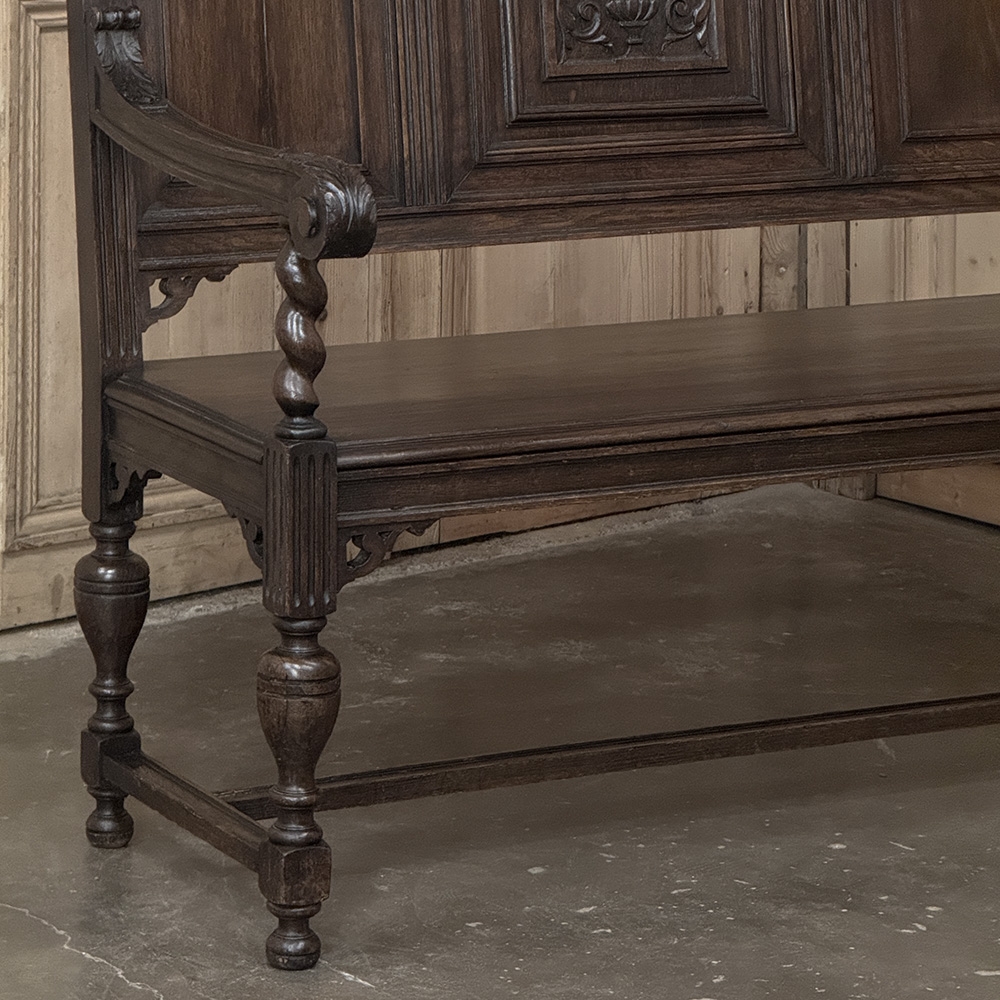
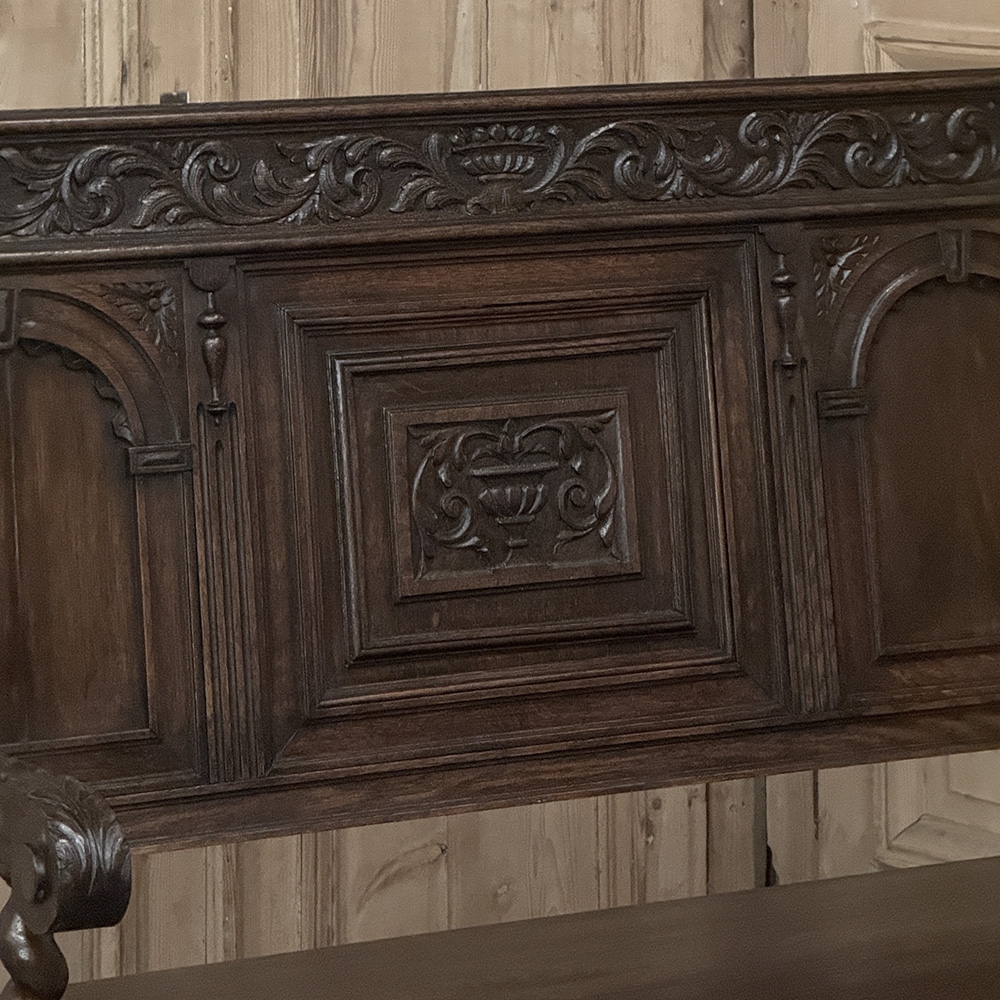
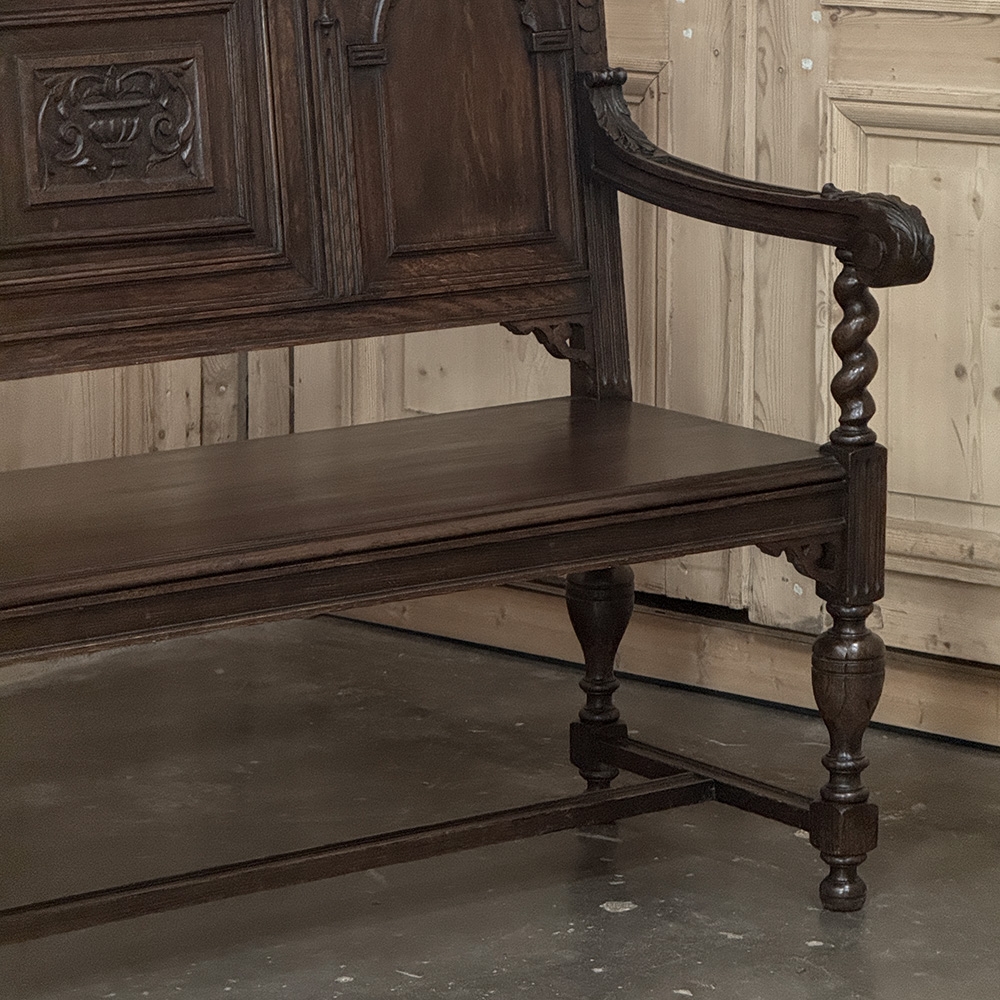
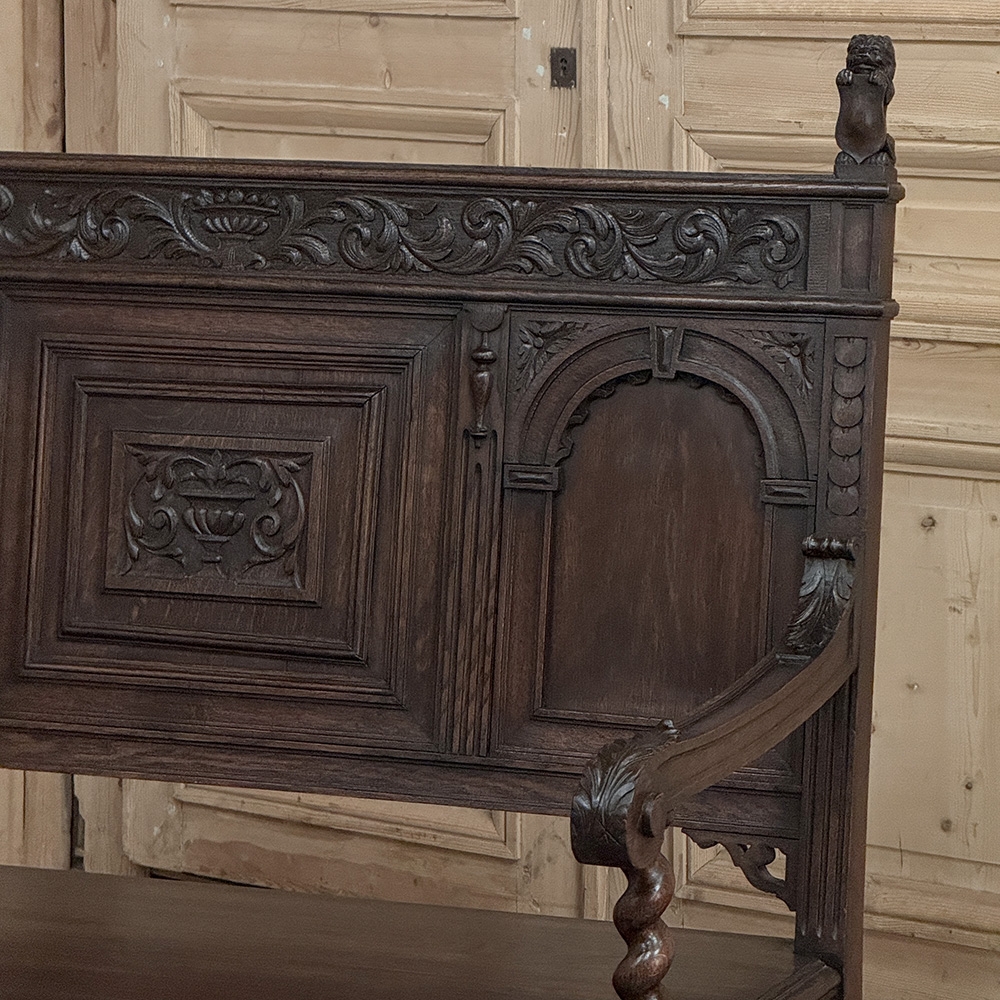
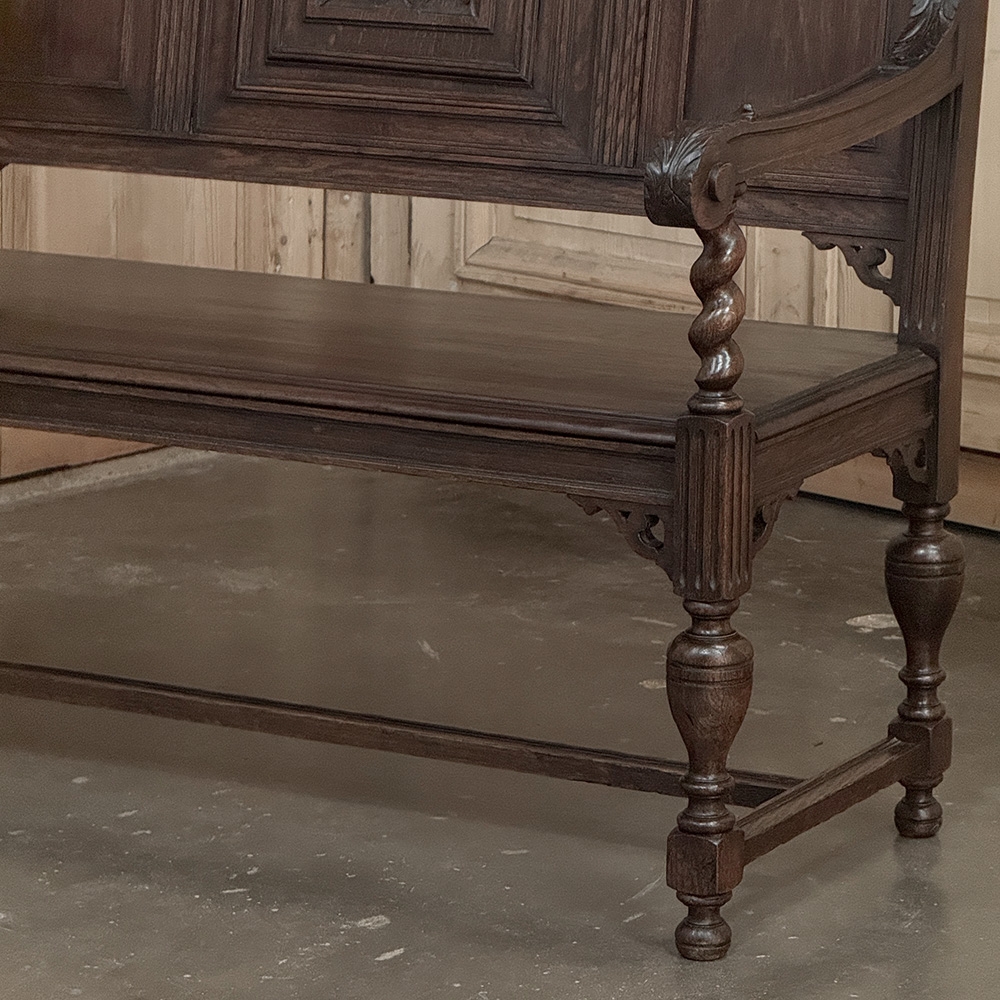
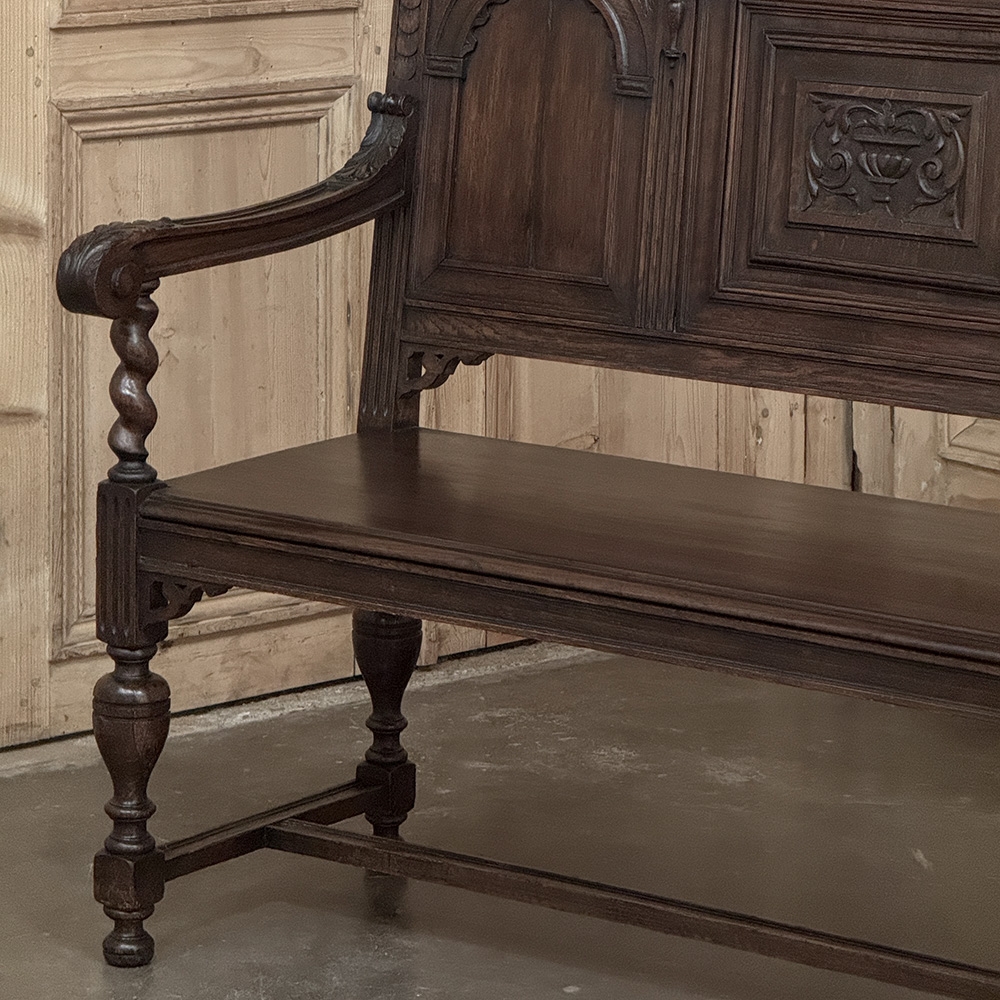
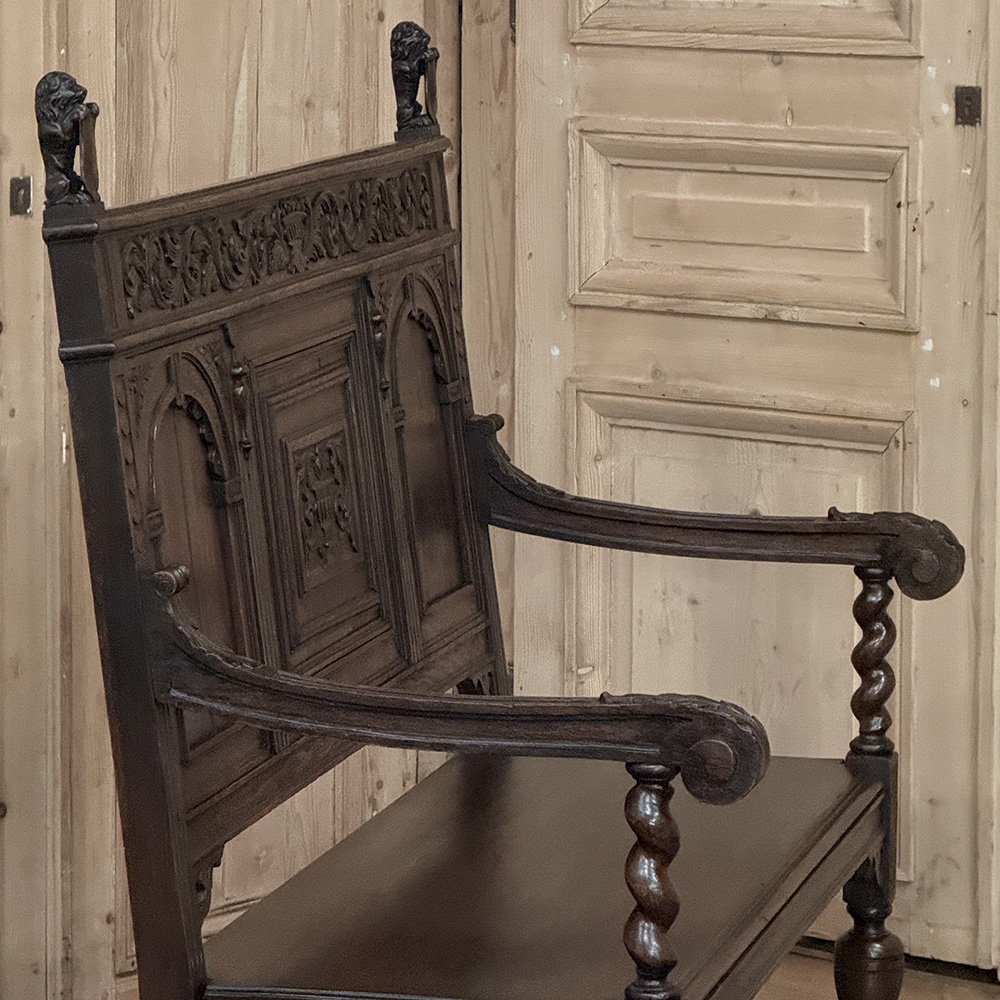
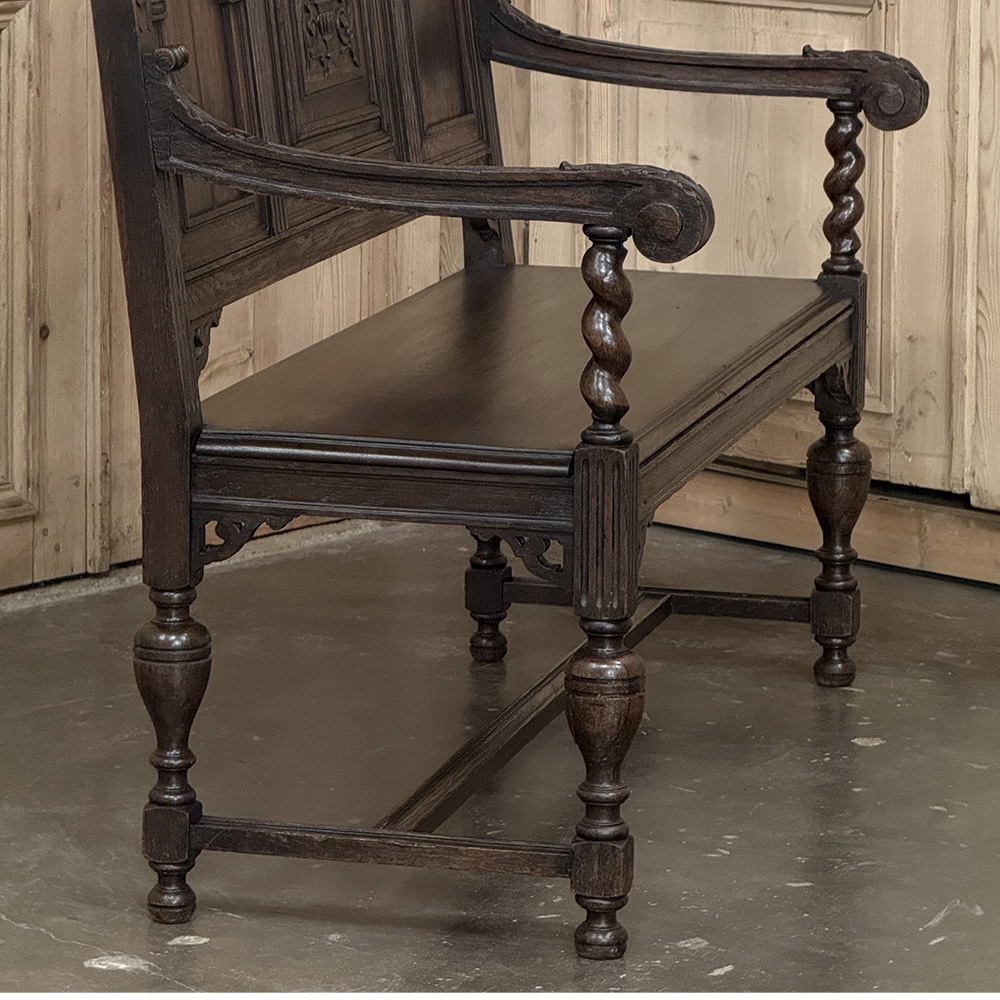
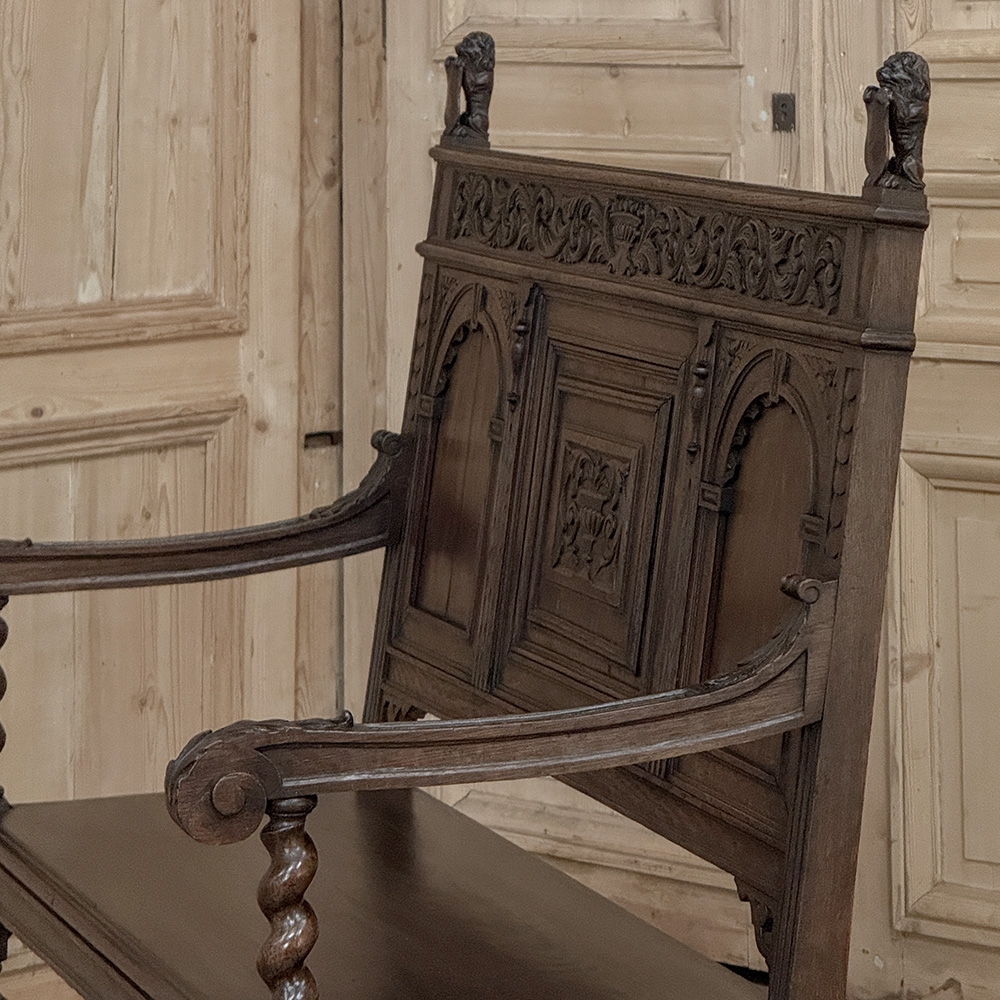
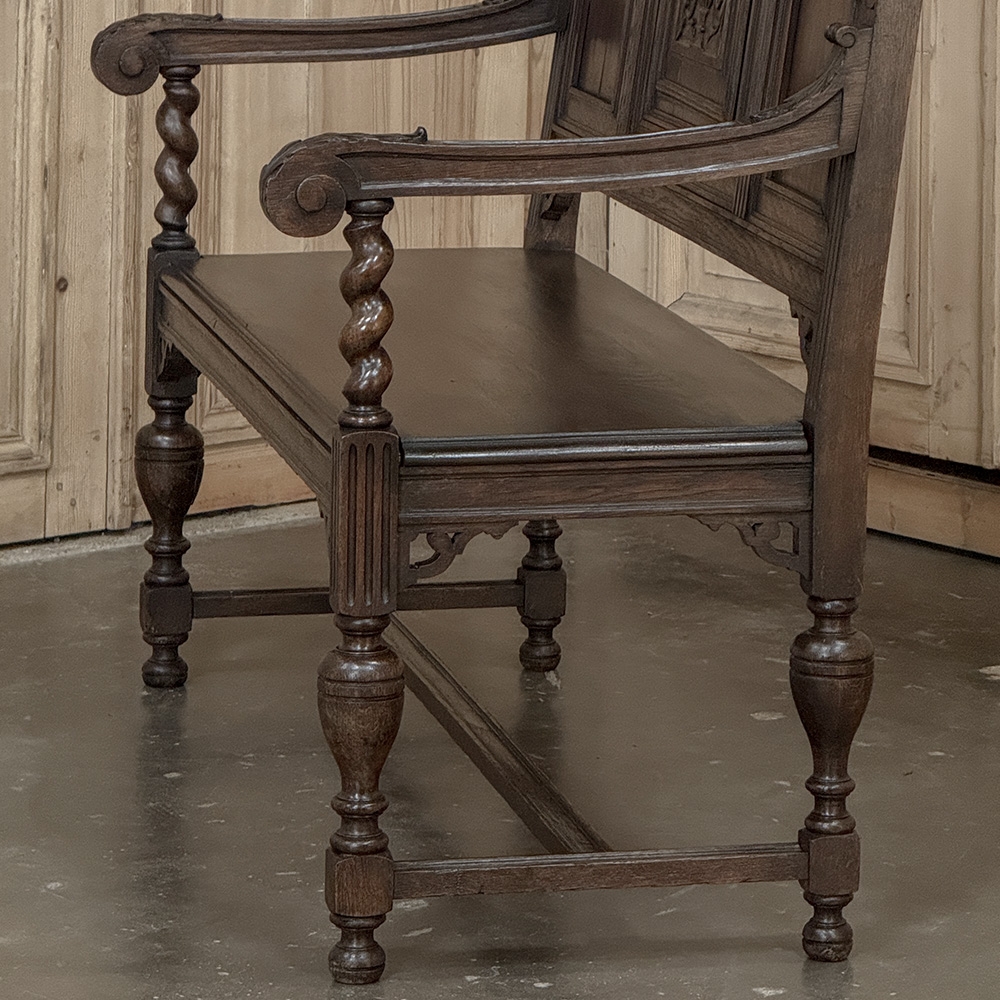
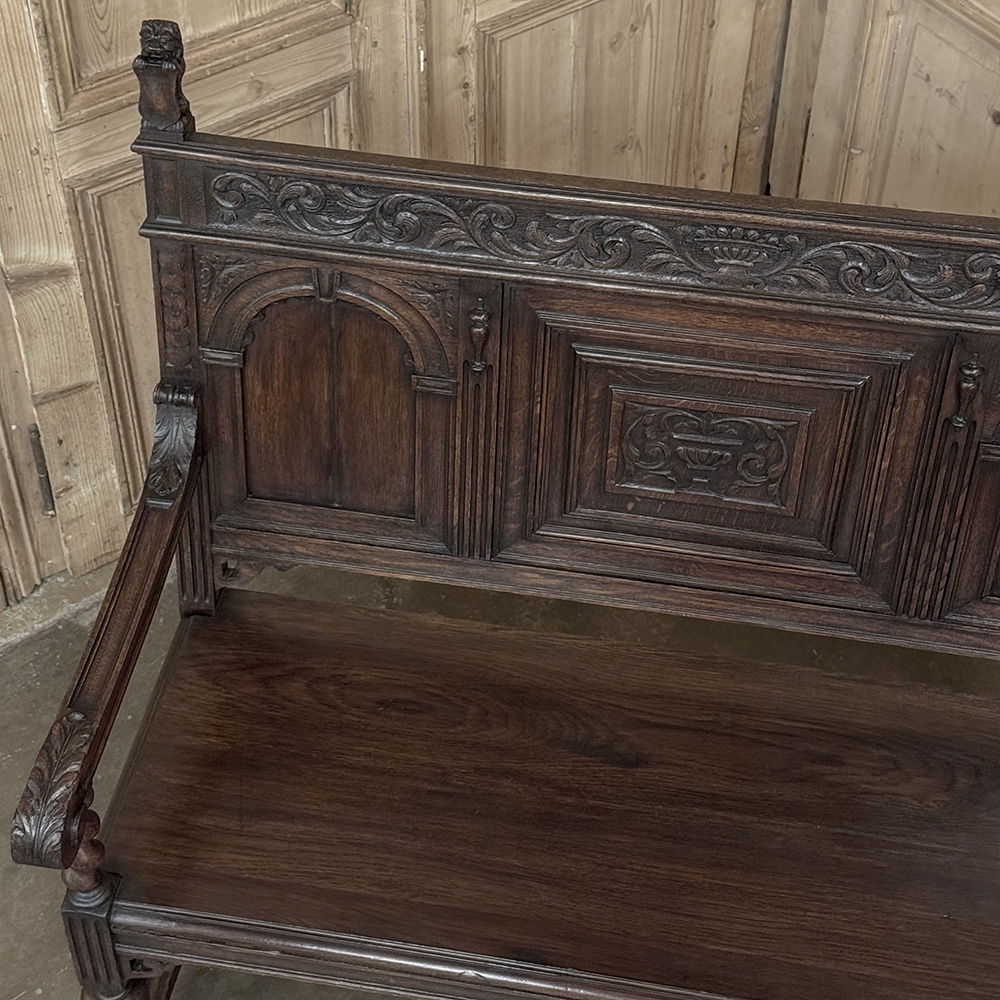
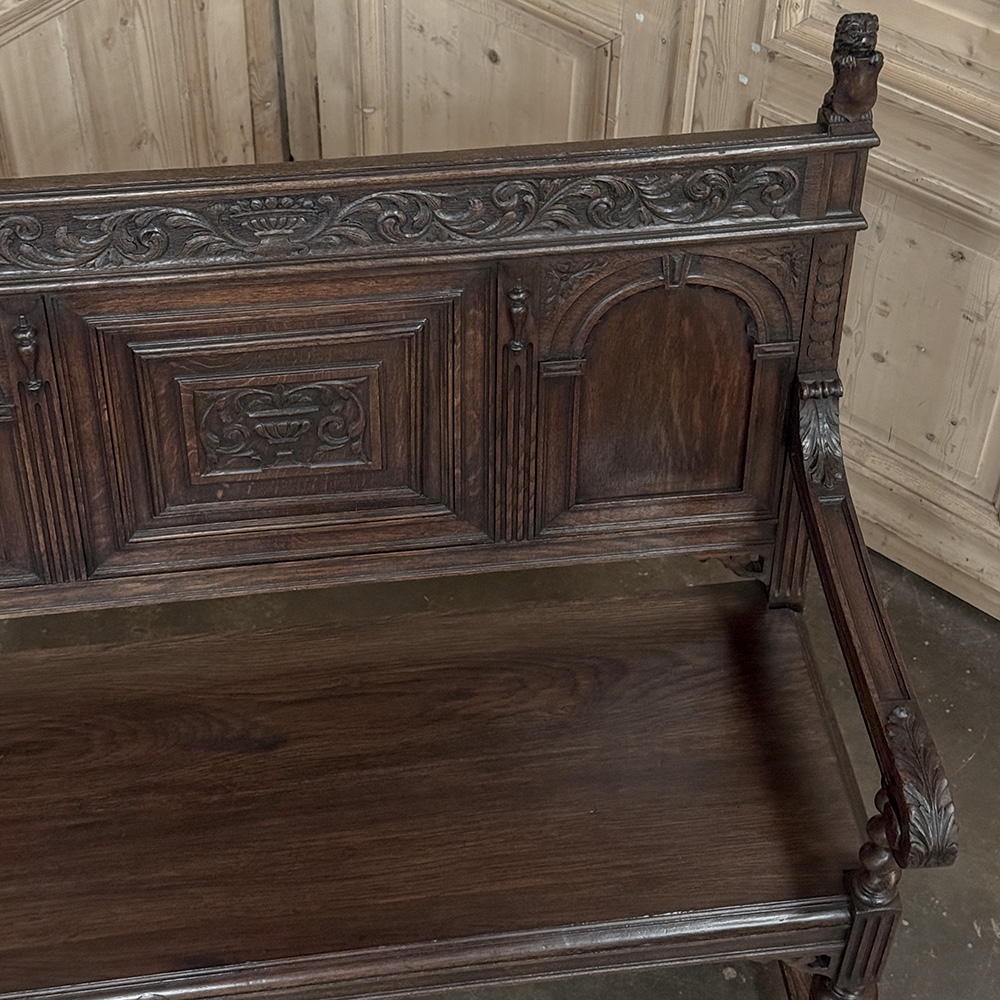
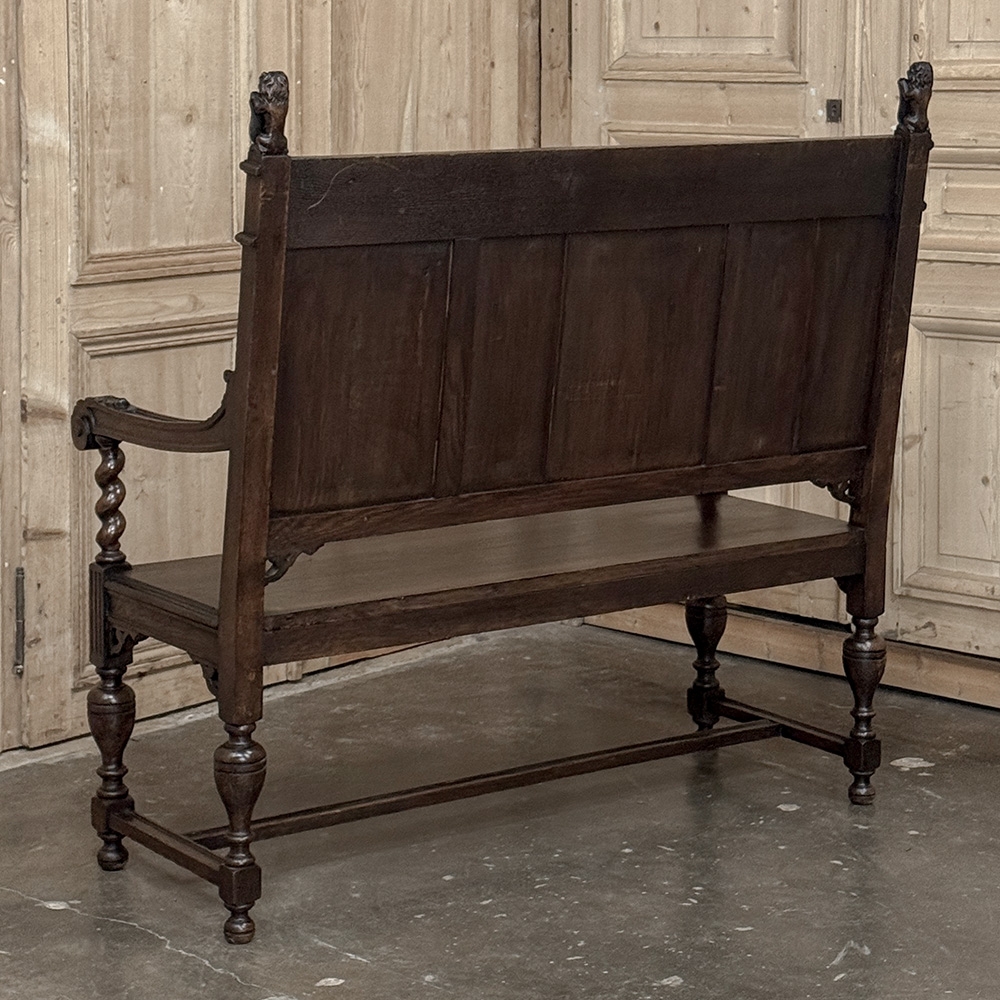
Its tall back is conceived almost as an interior façade, with Renaissance inspired arches, substantial molded framing, scrolling foliate carving, and a central carved tureen or covered urn motif. Particularly charming are the small sculpted lions crowning the upper posts, each holding a heraldic shield, recalling the heraldic elements so frequently incorporated into Renaissance architecture and furnishings. Barley twist columns supporting the arms introduce another important historic reference while also demonstrating the skill of the wood turner, and the use of oak reflects the long northern European tradition of selecting this strong, beautifully grained timber for substantial furniture and architectural woodwork.
Just as important is the history of the hall bench itself. In a 19th century home, the entrance hall was not simply a passageway but a functioning social space and the first formal introduction a visitor received to the household. Long before telephones made it possible to announce a visit in advance, callers arrived at the door and might wait in the hall until the occupants were informed and the visitor was received. A handsome bench provided an appropriate place to sit during that interval, while its quality, carving, and architectural presence immediately communicated something about the home and its owners. The Renaissance Revival ornament was therefore part of the bench’s purpose, helping transform a practical piece of seating into an important element of the entrance itself.
Today, the same form remains remarkably useful, whether placed in an entry, mudroom, gallery, or along an open wall where its architectural arches, carved lions holding heraldic shields, barley twist supports, and richly carved oak can be appreciated both as functional furniture and as a tangible expression of the 19th century fascination with Europe’s Renaissance past.
Circa 1870s
Measures 48H x 48W x 23D; seat 18.5H
Click HERE to see a short video!
Available at Inessa Stewarts Antiques showroom in Dallas Texas


